Scooter Space
- 4.6
- Rating
- 5.00M
- Installs
- Free
- Price
 Analysis by App-foxy
I approached Scooter Space as a quick sports game rather than a serious simulation, and that distinction matters. Its appeal comes from riding a scooter through custom parks, finding lines that feel satisfying, and sharing the space with other players online. It is easy to understand within minutes, but it has enough room for experimentation to keep a curious player busy beyond the first session.
The game is free to download, with optional purchases ranging from $0.99 to $19.99 per item. It is rated for Everyone, so it is a reasonable choice for younger players as well as adults who want something relaxed. DRSV, LLC. is the developer, and the game has built a sizable audience, with over 5 million installs and an average rating of 4.5 from around 17 thousand ratings.
My overall impression is positive, especially if you enjoy movement-based games where creativity matters more than winning a conventional match. I would not choose it as a replacement for a deep skateboarding simulator or a competitive sports title. I would choose it when I want a short, playful session with plenty of space to practice, explore, and show off a route.
You May Also Like

 Google Keep - Notes and lists
Google Keep’s Quiet Growth Shows the Appeal of Simpler Notes
As mobile work gets busier, Google Keep keeps winning a simple contest: capture a thought quickly, find it later, and get on with the day.

 Blood Strike: 2.5 Anniversary
Blood Strike’s Loadouts Turn Every Drop Into a Tactical Gamble
A close look at Blood Strike’s custom loadouts: how fast access to signature weapons reshapes its battle royale rhythm, rewards preparation, and narrows the gap between fights.

 Pandora - Music & Podcasts
Pandora’s Music Is Easy to Start, but Harder to Recover
Pandora’s strength is its low-effort path from a seed to a station. Its weak spot is how much confidence it asks you to place in connection, setup, and quiet recovery.

 8 Ball Pool
 Is Built on Rivalries, Rematches, and Routine
A close look at the rivalries, rematches, shared routines, and unanswered safety questions that turn a quick pool match into a persistent mobile community.

 Samsung Music
’s Quiet Strength Is Playing What You Already Own
Its reach comes less from spectacle than from dependable access to a personal library. That simplicity is both the app’s strongest retention engine and its ceiling.

 AccuWeather: Weather Radar
AccuWeather Review: A Quick, Clear Forecast for Everyday Decisions
For everyday plans, the best forecast is the one you can understand quickly. AccuWeather makes rain timing, radar, and local conditions easy to act on, with a few trade-offs.
More From Our News Desk



How the current version feels to play
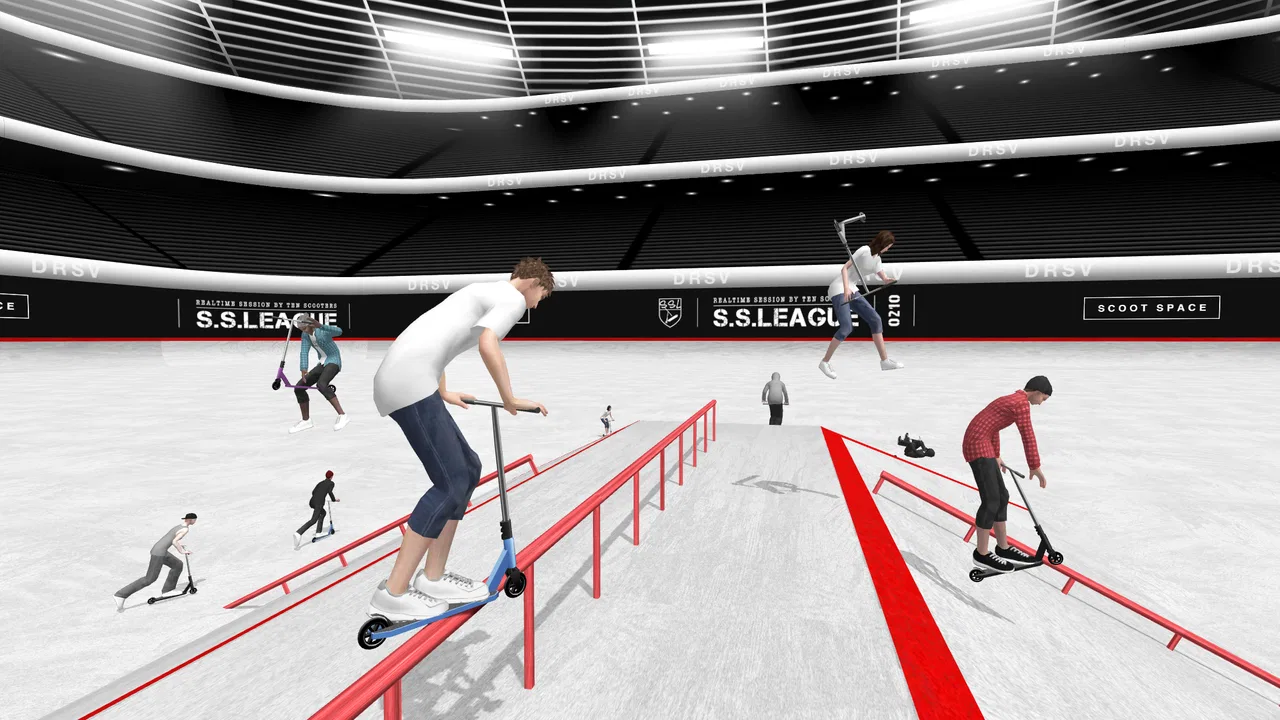
The central idea is straightforward: ride a scooter around a collection of parks and use the environment to create your own runs. That simplicity is one of the game’s strengths. I did not have to spend a long time learning complicated rules before getting to the enjoyable part. The parks themselves provide the challenge, because ramps, edges, gaps, and open areas invite different approaches.
Rather than forcing every player through the same race structure, the game gives more attention to personal movement. One player may focus on linking tricks, another may search for unusual routes, and someone else may simply cruise around to understand the layout. That makes the experience feel more like a digital playground than a traditional sports campaign.
The multiplayer element changes the mood considerably. Seeing other riders in the same online session makes the parks feel less empty and gives the game a social layer, even when nobody is following a formal competition. I found that useful for casual play: I could enter, ride for a while, watch what other people were doing, and leave without feeling that I had failed to complete a demanding objective.
There is also a clear difference between playing for a few minutes and trying to improve. A short visit works well when I only want a distraction. Longer sessions become more interesting when I start memorizing the shape of a park and planning a line before attempting it. The game rewards that kind of repetition, although players who need constant unlocks, missions, or story progression may find the open-ended structure less motivating.
Why the custom parks matter
The variety of custom parks is more important than the short store summary might suggest. A park is not merely a background for tricks; it determines how the game feels. Tight spaces encourage precision, while larger layouts give more freedom to experiment. Some players will prefer finding a clean route through obstacles, while others will enjoy returning to one familiar area and refining a sequence.
My practical advice is to avoid judging the game after only one park. The first area you enter may not match your preferred riding style. Spend time exploring several layouts before deciding whether the controls and pacing suit you. The game’s strongest moments appear when the park design and your chosen approach happen to fit together.
Custom environments also create a useful reason to revisit the game. Even without a conventional story, a new layout can change what feels possible. I like that the motivation comes from discovering better routes rather than simply checking off another stage. The trade-off is that the experience depends heavily on whether you personally enjoy self-directed play.
Controls, practice, and the learning curve
On a phone, movement-based games live or die by their controls. Scooter Space is approachable because the basic goal is obvious, but getting consistent results requires patience. A trick that looks easy in an open area may become awkward near a wall or landing. Small timing mistakes can turn a promising run into a messy one, which is normal for this type of game but can frustrate players expecting instant precision.
I recommend using the early part of a session as a practice period rather than immediately trying to impress other riders. Learn how the scooter responds when you change direction, how much space a landing needs, and which parts of a park offer room to recover from a mistake. This is one of the less obvious ways to enjoy the game: treat the environment as a training course instead of rushing from one stunt to the next.
Another useful habit is to build a route in sections. First find a reliable starting movement, then add a second obstacle, and only afterward attempt a longer chain. This approach makes improvement feel measurable even though the game does not need to present a formal lesson system. It is also kinder to players using a smaller phone screen, where judging distance and alignment can take extra effort.
The learning curve is therefore gentle at the beginning but more demanding if you want polished runs. That balance works for me. Casual players can ride without mastering every detail, while dedicated players have a reason to repeat the same area. Still, anyone looking for a button-tapping game with almost no practice should expect some friction.
Online sessions and the social side
The multiplayer format is best understood as shared space rather than a strict sports league. That distinction helps set expectations. I enjoy the sense of presence created by other riders, but I would not enter expecting the structure of a ranked competition or a carefully organized tournament. The fun comes from being around activity and having a place to demonstrate what you have learned.
A realistic everyday use case is a short break between errands or classes. I can open the game, choose a park, spend ten minutes trying to improve one line, and stop without needing to remember a complicated campaign objective. If friends are also playing, the same session becomes more entertaining because the park provides a common place to meet and compare styles.
There is a trade-off here. Online play adds energy, but it can also make the experience feel less predictable than a private practice session. When I want to concentrate on a difficult route, a quieter environment is more useful. When I want a casual change of pace, seeing other riders makes the park feel more alive. The right mode depends on whether the goal is improvement or relaxation.
Players should also think about their connection and device situation before committing to long sessions. Any online-focused game is less convenient when connectivity is unreliable, and a phone that struggles with 3D movement may make precision harder. I would test a short session first rather than assuming every device will deliver the same comfort.
What has changed and what that means for players
The current version is 1.028, and the game was released on March 15, 2021. That history is useful context: this is not a brand-new experiment waiting to prove its basic idea. It has had time to establish its identity around scooter riding, online sessions, and custom parks. I see the present version as an established take on a focused concept rather than a broad sports package trying to cover every discipline.
When I look at the game’s evolution through its current version, the important point is continuity. The features that define the experience still work together as one clear loop: enter a park, ride, practice, explore, and share the space. That focus is reassuring for existing players because the game does not appear to be abandoning its original character in favor of unrelated systems.
For someone returning after time away, I would begin by revisiting familiar parks before judging the whole experience. Returning players often remember a route but forget the small timing details that made it work. A short warm-up can reveal whether the current controls still feel natural and whether your old favorite line remains enjoyable.
New players should approach the version number less as a promise of a huge feature list and more as a sign that they are entering a mature, recognizable game. The most useful question is not whether it has every modern sports-game feature, but whether its particular style of open-ended scooter play matches what you want. If it does, the focused design is an advantage. If it does not, a newer arcade racer or a more structured trick game may suit you better.
The free entry point also affects how I recommend it. You can try the core experience without paying first, which makes experimentation easy. Optional purchases may be suitable for players who already know they will spend a lot of time in the parks, but I would not buy anything immediately. Play enough to decide whether the movement, online atmosphere, and custom environments hold your attention.
This is especially important for families. The Everyone rating makes the game broadly accessible, but age suitability is only one part of the decision. Younger players may enjoy the freedom and simple premise, while parents should still consider whether online interaction is appropriate for their household and whether the child prefers open exploration over clearly assigned goals.
Where it stands beside other sports games
Compared with a conventional racing game, Scooter Space feels less focused on speed and more focused on the quality of a route. There is no need to view every park as a track with one correct direction. Compared with a realistic action-sports simulator, it is easier to approach and less concerned with reproducing every technical detail. That makes it friendlier for casual players, although simulation fans may find it too light.
It also differs from sports games built around seasons, teams, or career progression. Here, the park is the main source of variety. If you enjoy creating your own objectives, that is liberating. You can decide that today’s goal is a clean sequence, a new shortcut, or simply learning the shape of an unfamiliar area. If you need a visible ladder of rewards, the lack of that structure may make sessions feel directionless.
In comparison with a solitary trick game, the online session gives this title a stronger sense of place. You are not only testing your own timing; you are entering a shared environment. The downside is that the social value depends on how much you enjoy playing around other people. A player who wants complete control over the pace may prefer a more traditional offline alternative.
My recommendation is therefore quite specific. Pick this game if you like scooters, custom spaces, experimentation, and casual online presence. Skip it if you want licensed sports content, a detailed career, a strict competitive ranking system, or a realistic training simulator. Those are not flaws in isolation; they are simply outside the game’s clearest purpose.
Small details that improve the experience
One of the best ways to get more from the game is to stop treating every failed attempt as wasted time. A failed landing can show that a route requires more room, a different angle, or a shorter combination. I often learn more by repeating one obstacle with a small adjustment than by constantly jumping between parks without understanding why a run breaks down.
Another useful approach is to choose a park based on your mood. Use an open layout when you want to experiment freely, and a tighter area when you want a technical challenge. This simple choice prevents the game from feeling repetitive because you are changing the kind of problem you are solving, not merely changing scenery.
For online sessions, I would separate social riding from focused practice. Start by exploring alone or with minimal distraction, then join the shared atmosphere once you have a route worth showing. That workflow gives the multiplayer feature a purpose without making every attempt feel like a performance.
Finally, keep sessions short when your hands or attention begin to tire. Precision movement becomes less enjoyable when I am forcing it. The game works particularly well in compact visits, and there is no benefit in turning a playful activity into a chore. Returning later with a clear head often produces better runs than pushing through frustration.
Remaining gaps and who should think twice
The open-ended format is not universally satisfying. I can understand why some players may want more explicit goals, clearer progression, or a stronger sense of accomplishment after mastering a park. The freedom to set personal challenges is valuable, but it also places more responsibility on the player. If you need the game to tell you exactly what to do next, this may feel thin.
The online emphasis may also narrow its usefulness. It is a good fit for players who like shared spaces, but less ideal for someone seeking a fully private, offline-friendly sports experience. Likewise, players who mainly want realistic scooter physics should compare it with simulation-oriented alternatives before settling in.
There is also the question of optional spending. The game is free, but purchases between $0.99 and $19.99 per item mean that interested players should decide their own budget before browsing extras. My advice is simple: let the core riding experience earn your attention first. Spending makes more sense after you know that the parks and multiplayer loop are something you will return to regularly.
Device compatibility is broad enough for older supported phones because the minimum operating system is Android 7.0, but operating-system support alone does not guarantee an equally comfortable experience on every handset. Screen size, performance, and connection quality can all influence how easy it is to judge a landing. I would use the first session as a practical test of responsiveness rather than relying only on the installation requirement.
What I would watch next
For future updates, I would be most interested in anything that deepens the relationship between parks and players without losing the game’s simplicity. More meaningful ways to revisit custom environments, clearer tools for practicing lines, or improvements that make online sessions easier to enjoy would strengthen the existing idea. I would prefer thoughtful additions over systems that turn a relaxed playground into a crowded menu of chores.
Existing users should watch whether the game continues to preserve its quick-entry appeal. The best part of Scooter Space is that I can start riding without preparing for a long campaign. Any evolution should keep that immediacy while giving committed players more reasons to refine their skills.
New users should watch their own reaction during the first few sessions. Do you find yourself searching for another route, repeating a landing to improve it, or looking forward to seeing what a different park offers? Those are good signs. If you finish each session wishing for missions, realism, or a formal competition, another sports game will probably be a better investment of your time.
After spending time with it, I see Scooter Space as a focused and approachable sports game with a welcome sense of freedom. Its custom parks and online sessions give it personality, while the free entry point makes trying that personality easy. The experience is not designed for everyone, and its open structure can leave goal-driven players wanting more, but that same openness is exactly why I enjoy recommending it to friends who like making their own fun.
My final recommendation: try it when you want a casual scooter playground, a place to practice creative routes, or a light online session that does not demand a full evening. Give it time to reveal the parks rather than judging it as a conventional racer. If you enjoy setting personal challenges, it can become surprisingly absorbing; if you need a deep career or strict competition, choose a different sports title.
FAQs for Scooter Space
01What is Scooter Space and how does it work?
Scooter Space is a dynamic and engaging mobile game designed for both Android and iOS platforms. Players can immerse themselves in a virtual world where they perform tricks and stunts on scooters. The game features a variety of customizable scooters and environments, offering players a chance to showcase their skills and creativity.
02Is Scooter Space free to play, and are there in-app purchases?
Scooter Space is free to download and play, providing an enjoyable experience without any initial cost. However, it offers in-app purchases that allow players to unlock additional features, accessories, and customization options. These purchases enhance the gameplay experience but are not necessary to enjoy the core game.
03What are the key features of Scooter Space that set it apart from other games?
Scooter Space stands out with its realistic physics engine, allowing for smooth and believable scooter movements. The game offers extensive customization options for scooters and characters, a variety of environments to explore, and a multiplayer mode for competitive play. These features create a unique and engaging experience for players.
04How does the multiplayer mode in Scooter Space enhance gameplay?
The multiplayer mode in Scooter Space allows players to compete against others from around the world in real-time. This feature adds a layer of excitement and challenge, as players can showcase their skills, compete for high scores, and climb the leaderboards. It also fosters a community of scooter enthusiasts, enhancing the game's social aspect.
05What devices and operating systems are compatible with Scooter Space?
Scooter Space is compatible with a wide range of devices running on both Android and iOS operating systems. It requires Android version 5.0 or higher and iOS version 10.0 or later. It is optimized for both smartphones and tablets, ensuring a smooth and enjoyable gaming experience across devices.
Pros
- Intuitive controls enhance gameplay experience.
- Variety of scooters and customization options.
- Engaging multiplayer mode adds competition.
- Frequent updates with new features.
- Realistic graphics and smooth animations.
Cons
- In-app purchases can be pricey.
- Occasional connectivity issues in multiplayer.
- Limited offline gameplay options.
- Ads can interrupt gameplay flow.
- Some features locked behind paywalls.

Scooter Space
Gallery